

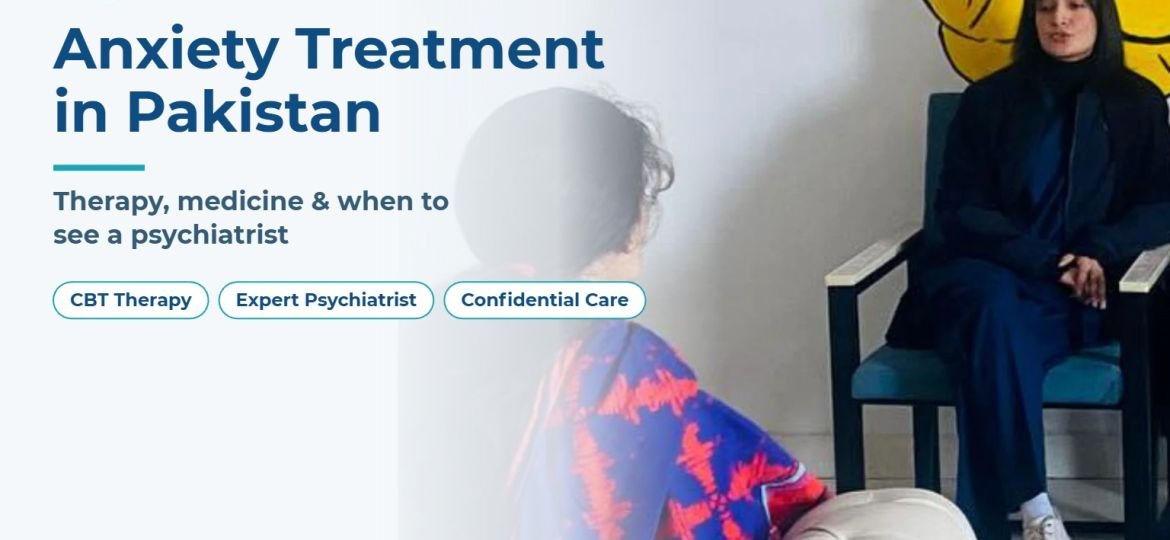
Constant worry, a racing heart, sleepless nights and a feeling that something bad is about to happen can make everyday life exhausting. The good news is that anxiety treatment in Pakistan has improved a lot, and most people who get proper help feel much better within weeks to months. This guide explains the main treatment options, how therapy and medicine work together, why you should never self-medicate with anxiety tablets, and when it is time to see a psychiatrist.
What Is an Anxiety Disorder?
Everyone feels anxious sometimes, before an exam, a job interview or a family event. An anxiety disorder is different. The worry is stronger, lasts longer, and starts to affect work, studies, relationships and sleep. According to the National Institute of Mental Health (NIMH), anxiety disorders are among the most common mental health conditions, and they are treatable.
Common types include:
- Generalised anxiety disorder (GAD): ongoing worry about many everyday things that is hard to control.
- Panic disorder: sudden panic attacks with a pounding heart, breathlessness, sweating and fear of dying or losing control.
- Social anxiety: intense fear of being judged or embarrassed in front of others.
- Phobias: extreme fear of specific things or situations.
- Health anxiety: persistent fear of having a serious illness despite normal test results.
Signs You May Need Anxiety Treatment
Many people in Pakistan visit cardiologists, physicians and emergency departments again and again for chest pain or breathlessness, only to be told that “the reports are normal”. These physical symptoms are often anxiety. Consider professional help if you notice:
- Worry that you cannot switch off for most days over several weeks
- Restlessness, irritability or feeling “on edge”
- Racing heart, chest tightness, shaking or sweating without a medical cause
- Trouble falling or staying asleep
- Stomach problems, headaches or muscle tension
- Avoiding places, people or tasks because of fear
- Sudden panic attacks
Some of these symptoms are easy to dismiss as everyday stress. Our article on 10 anxiety symptoms people often dismiss explains the warning signs in more detail.
Anxiety Treatment Options in Pakistan
The right plan depends on how severe the symptoms are, how long they have lasted, and whether there are other conditions such as depression. Most people do best with a combination of approaches.
1. Psychotherapy (talk therapy)
Therapy is a first-line treatment for most anxiety disorders. The most researched form is cognitive behavioural therapy (CBT), which helps you:
- Recognise anxious thinking patterns
- Challenge “what if” and worst-case thoughts
- Gradually face feared situations in a safe, planned way
- Learn breathing and relaxation skills to calm the body
Therapy usually runs over several weekly sessions with a trained psychologist or therapist, and the skills you learn keep working long after treatment ends.
2. Medication prescribed by a psychiatrist
For moderate to severe anxiety, a psychiatrist may recommend medicine alongside therapy. Some modern anti-anxiety medicines are taken daily for several months and need a few weeks to show their full effect. Other calming tablets act quickly but can cause dependence if used for long periods without supervision.
The choice of medicine, the dose and how long to take it should always be decided by a qualified psychiatrist after a proper assessment, and reviewed at follow-up visits.
3. Lifestyle and self-help support
- Regular sleep and wake times
- Daily physical activity, even a 30-minute walk
- Reducing tea, coffee, energy drinks and smoking
- Breathing exercises, prayer, meditation or mindfulness
- Talking openly with trusted family or friends
These steps help everyone, but on their own they are usually not enough for an anxiety disorder.
4. Treating related conditions
Anxiety often comes with depression, panic, obsessive-compulsive symptoms, substance use or thyroid problems. A complete assessment makes sure nothing important is missed.
Anxiety Medicine in Pakistan: Why Self-Medication Is Risky
Searches for anxiety medicine in Pakistan and anxiety tablets in Pakistan are very common, and many pharmacies sell calming tablets without a prescription. This creates real risks:
- Dependence: some sedative tablets become habit-forming within weeks.
- Withdrawal: stopping suddenly can cause rebound anxiety, insomnia and, in some cases, seizures.
- Masking the problem: tablets may hide symptoms without treating the cause.
- Interactions: mixing medicines, sleeping pills or alcohol can be dangerous.
- Wrong diagnosis: thyroid problems, heart conditions or depression can look like anxiety.
There is no single “best medicine for depression and anxiety in Pakistan” that suits everyone. The safest medicine is the one chosen for you by a psychiatrist who knows your full history. If you are already taking anxiety tablets, do not stop or change them on your own; speak to a doctor first.
When Should You See a Psychiatrist?
You do not need to wait until anxiety becomes unbearable. Book an appointment with a psychiatrist if:
- Anxiety has lasted more than a few weeks and is affecting work, study or family life
- You are having repeated panic attacks
- You have been taking calming tablets regularly and find it hard to stop
- You also feel low, hopeless or lose interest in things you used to enjoy
- You are using drugs, alcohol or sleeping pills to cope
- Therapy or self-help alone has not helped
Seek urgent help immediately if you or someone you know has thoughts of self-harm or feels unable to stay safe.
What Happens at Your First Visit
Many people delay treatment because they do not know what to expect. At a first consultation, the psychiatrist will usually:
- Ask about your symptoms, when they started and what makes them better or worse
- Review your medical history, current medicines and any substance use
- Suggest tests if a physical cause needs to be ruled out
- Explain the diagnosis in simple language
- Agree a treatment plan with you, which may include therapy, medicine or both
Everything you share is kept confidential.
How PIMH Can Help
The Pakistan Institute of Mental Health (PIMH) in Rawalpindi provides complete anxiety care for patients from Rawalpindi, Islamabad and across Pakistan. Through our psychiatric and psychotherapy clinic, we offer:
- Detailed psychiatric assessment for anxiety, panic and related conditions
- Psychotherapy and counselling, including CBT-based approaches
- Carefully supervised medication when it is needed
- Support for people who want to safely reduce dependence on calming tablets
- TMS and other advanced options for difficult-to-treat depression with anxiety
- Family counselling so loved ones understand how to help
If you are looking for a specialist close to home, read our guide to the best psychiatrist in Rawalpindi to understand what to look for in a mental health doctor.
Frequently Asked Questions
Can anxiety be cured completely?
Many people recover fully or reach a point where anxiety no longer controls their life. With the right treatment, most people learn to manage symptoms well, and the skills they gain help prevent future episodes.
Is therapy or medicine better for anxiety?
For mild anxiety, therapy alone often works well. For moderate to severe anxiety, a combination of therapy and medicine prescribed by a psychiatrist usually gives the best results. Your doctor will help you decide.
Are anxiety tablets addictive?
Some quick-acting calming tablets can cause dependence if taken regularly without supervision. Other anxiety medicines are not habit-forming. This is why anxiety medicine should only be taken under a psychiatrist’s guidance.
How long does anxiety treatment take?
Many people notice improvement within a few weeks of starting therapy or medication. A full course of treatment often lasts several months, followed by regular follow-up to prevent relapse.
Can I get anxiety treatment at PIMH if I live outside Rawalpindi?
Yes. PIMH sees patients from Islamabad, Chakwal, Attock, Peshawar and other cities across Pakistan. You can call first to discuss the best way to start treatment.
Book a Confidential Consultation
Anxiety is common, real and treatable, and you do not have to manage it alone. Visit PIMH near Royal Palace Hotel, Opposite Ayub Park, Main GT Road, Chaklala Cantt, Rawalpindi, call +92-51-5451112 or +92-51-5451113, or reach our emergency line on +92-334-2466777. You can also contact PIMH online to book an appointment. Our clinic is open Monday to Friday, 9:30am to 6:30pm.
This article is for awareness only and is not a substitute for a professional consultation.

[…] Depression and anxiety disorders […]