

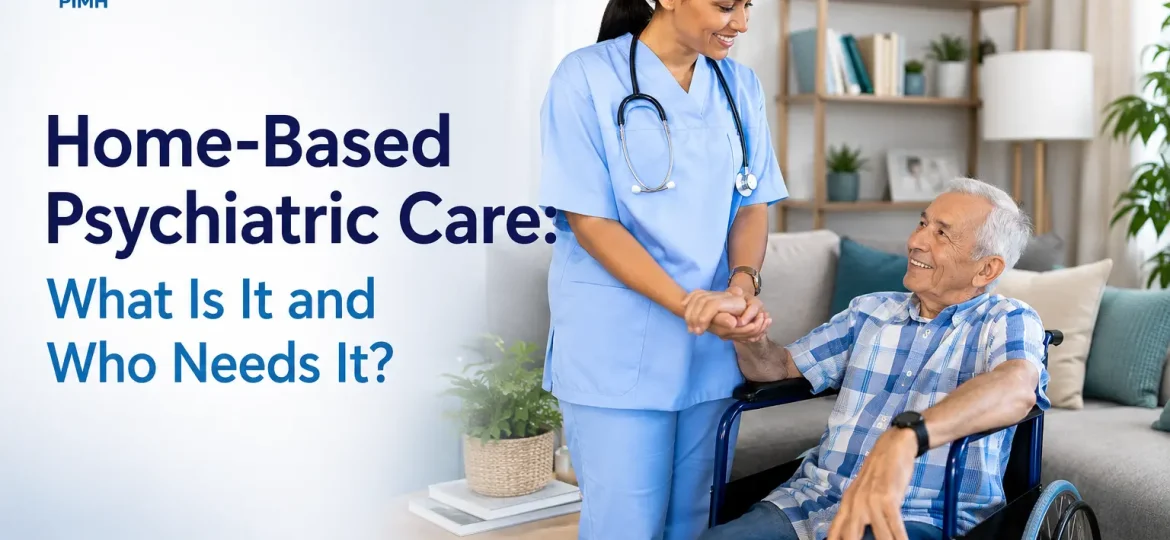
Home-Based Psychiatric Care: What Is It and Who Needs It?
Not every patient can walk into a psychiatric clinic. Some are too weak, too anxious, too aggressive, or simply too far from a hospital to make the trip. Home-based psychiatric care brings the psychiatrist, the nurse, and the treatment plan directly to the patient’s home instead of asking the patient to come to them. It is one of the fastest-growing forms of mental health support in Pakistan, especially in cities like Rawalpindi and Islamabad, where families are increasingly choosing home visits over hospital admissions for elderly relatives, bedridden patients, and people living with serious mental illness.
If you are searching for a home visit psychiatrist near you, or wondering whether a loved one qualifies for home-based mental health care, this guide covers everything you need to know.
What Is Home-Based Psychiatric Care?
Home-based psychiatric care is a treatment model in which a qualified psychiatrist, psychologist, or psychiatric nurse visits the patient at home to carry out assessment, counselling, medication management, and follow-up, instead of the patient visiting a hospital or clinic. It covers a wide range of services, from a single home visit after a crisis to an ongoing care plan for someone with a long-term psychiatric condition.
In Pakistan, this model has become especially important because many patients face real barriers to hospital-based care: long travel distances, mobility problems, family stigma around visiting a “mental hospital,” or a patient who becomes distressed or aggressive outside familiar surroundings. Home-based psychiatric care removes these barriers by meeting the patient exactly where they are.
Why Home-Based Psychiatric Care Is Growing in Pakistan
Mental health awareness in Pakistan has improved significantly over the last decade, but access remains uneven. Most trained psychiatrists are concentrated in a handful of cities, and many families still hesitate to bring a relative to a psychiatric hospital because of social stigma. Home-based care addresses both problems at once, it delivers specialist treatment privately, respectfully, and without the patient needing to leave home.
It has also become a practical necessity for Pakistan’s ageing population, for patients recovering from strokes or surgery who develop psychiatric symptoms, and for families managing a relative with severe mental illness who refuses to visit a hospital.
Who Needs Home-Based Psychiatric Care?
Home-based psychiatric care is not only for the elderly, but it also benefits a wide range of patients. You or your family may need it if any of the following apply:
- Elderly patients with dementia, Alzheimer’s, or age-related confusion who become disoriented outside the home
- Bedridden or physically disabled patients who cannot be safely transported to a clinic
- Patients with schizophrenia, bipolar disorder, or psychosis who resist or fear hospital visits
- Individuals in acute mental health crisis, severe agitation, suicidal thoughts, or a breakdown that needs urgent attention
- Patients recently discharged from a psychiatric hospital who need supervised follow-up care
- People in addiction recovery who need continued monitoring and family-based support at home
- Children with autism, ADHD, or sensory sensitivities who feel overwhelmed in unfamiliar clinical settings
- Families who want to avoid the stigma attached to visiting a psychiatric facility openly
What Does a Home-Based Psychiatric Care Visit Include?
A typical home-based psychiatric service is not just a casual check-in; it follows the same clinical standards as an in-hospital consultation. It usually includes:
- A full psychiatric assessment of the patient’s mental and emotional state
- Medication review and management, including dosage adjustments
- Therapy or counselling sessions for the patient and, where needed, the family
- Crisis intervention when a patient is in acute distress
- Caregiver guidance, practical advice for family members managing day-to-day care
- A follow-up schedule so the patient’s progress is monitored over time, not just treated once
Benefits of Home-Based Psychiatric Care
Families often notice a real difference once treatment moves into the home environment:
- Familiar surroundings reduce anxiety and help patients open up more easily
- Better cooperation from patients who refuse to attend a clinic
- Family involvement, since relatives can observe the treatment plan and ask questions directly
- More privacy, which matters greatly for families concerned about stigma
- Continuity of care for patients transitioning from hospital to home
- Safety, especially for patients who are frail, elderly, or physically unable to travel
Home-Based Care vs. Hospital-Based Treatment
Home-based psychiatric care is not meant to replace hospital treatment in every case; severe emergencies, situations requiring inpatient monitoring, or patients who need 24-hour supervision may still need hospital admission. But for stable, mobility-limited, or crisis-averse patients, home-based care offers a safer and more comfortable alternative to repeated hospital visits, while still being guided by qualified psychiatric professionals.
How PIMH Supports Home-Based Psychiatric Care in Rawalpindi
At the Pakistan Institute of Mental Health (PIMH), our Crisis Intervention & Home Services team provides psychiatric assessment, counselling, and follow-up care directly at the patient’s home for families across Rawalpindi and Islamabad who cannot easily visit our facility. Our psychiatrists and mental health professionals are trained to manage everything from routine follow-ups to urgent psychiatric crises, always with the same clinical standards we apply at our centre near Ayub Park, Main GT Road.
If a loved one needs psychiatric support but cannot travel comfortably, our team can bring that care to your doorstep.
Explore More:
What exactly is home-based psychiatric care?
It is psychiatric treatment, assessment, medication management, therapy, and follow-up, delivered at the patient’s home by a qualified psychiatrist or mental health team, instead of requiring the patient to visit a hospital or clinic.
Who typically needs home-based psychiatric care?
It is most often needed by elderly patients with dementia, bedridden or physically disabled individuals, people with schizophrenia or bipolar disorder who avoid hospitals, patients recovering from a psychiatric crisis, and children who become distressed in clinical settings.
Is home-based psychiatric care effective for serious conditions like schizophrenia or bipolar disorder?
Yes. Many patients with severe mental illness respond better in a familiar environment, and home-based care allows psychiatrists to closely monitor medication adherence, family dynamics, and early warning signs of relapse, often improving long-term outcomes.
How is home-based psychiatric care different from a regular hospital visit?
The clinical process is similar, assessment, diagnosis, medication, and follow-up, but it takes place at home instead of a clinic. This removes travel stress, reduces stigma, and allows family members to be directly involved in the patient’s care.
Does PIMH offer home visit psychiatrist services in Rawalpindi and Islamabad?
Yes. PIMH’s Crisis Intervention & Home Services team provides psychiatric home visits for patients across Rawalpindi and Islamabad who are unable to visit our facility, covering both routine follow-up care and urgent psychiatric crises.
