

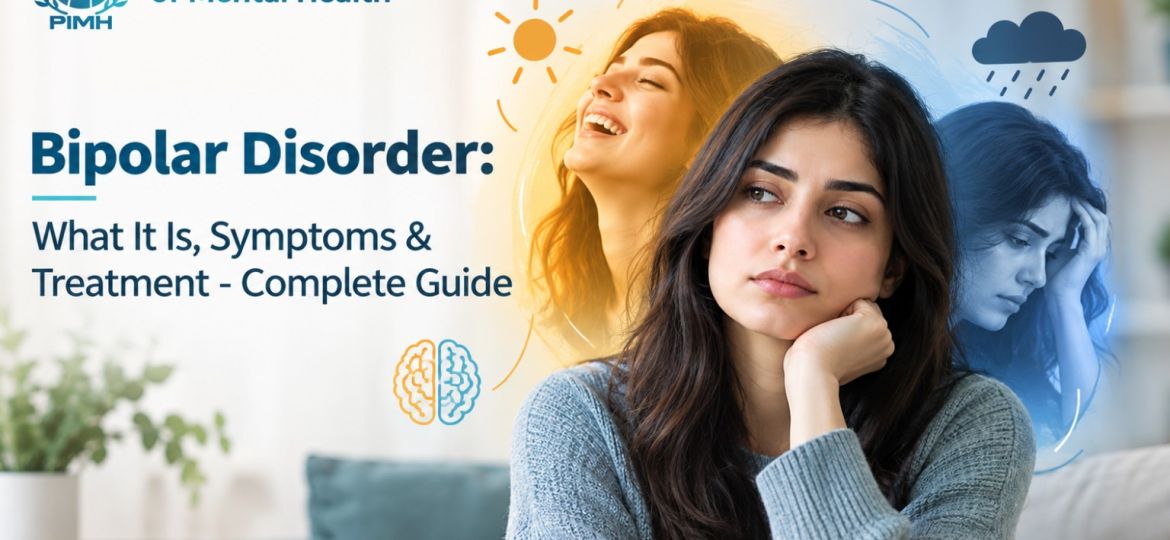
Bipolar Disorder: What It Is, Symptoms & Treatment – Complete Guide
What is Bipolar Disorder?
If you’re trying to understand bipolar meaning, here’s the simplest explanation: it’s a mental health condition where mood swings between two extremes. One end brings intense happiness and energy, the other brings deep sadness and hopelessness. But it’s not just regular mood changes – these swings are severe and can last for weeks.
What is bipolar disorder really like? Imagine someone who feels on top of the world one day, making huge life decisions, and then two weeks later they can barely get out of bed. That’s closer to the reality. The problem is the severity and duration – these aren’t normal mood changes that people can control with willpower.
Bipolar disorder is a brain condition affecting millions worldwide. If you think you might have it or someone close to you does, visiting PIMH is a good first step.
Understanding the Types
Bipolar disorder isn’t one single condition – there are different types, and knowing which one applies matters for treatment. Here’s the breakdown:
Bipolar I Disorder is the most serious form. People experience full manic episodes lasting at least a week where they might:
- Feel extremely happy or irritable for extended periods
- Need only 3-4 hours of sleep yet feel completely energized
- Experience racing thoughts and rapid speech
- Make impulsive decisions with serious consequences
- Engage in risky behavior without considering dangers
Bipolar II Disorder involves less intense highs called hypomania, lasting about four days. These individuals often experience more frequent and deeper depressions than Bipolar I. Cyclothymia is the mildest form with mild mood swings persisting for years.
Recognizing Bipolar Disorder Symptoms
Identifying bipolar disorder symptoms early can be life-changing. During high mood episodes, look for:
- Extreme mood elevation or irritability
- Barely any need for sleep
- Racing thoughts and rapid talking
- Extreme distractibility and jumping between tasks
- Risky spending, substance use, or reckless driving
- During depressive phases, bipolar disorder symptoms include:
- Persistent sadness and hopelessness lasting weeks
- Loss of interest in previously enjoyed activities
- Sleep problems and extreme fatigue
- Difficulty concentrating or making decisions
- Thoughts of death or suicide
What Causes Bipolar Disorder
Bipolar disorder causes are complex and involve both biology and environment. It’s not about weakness or bad choices. Understanding bipolar disorder causes helps remove stigma and enables proper treatment.
Brain chemistry is the primary factor. Neurotransmitters like serotonin and dopamine control mood, and in bipolar disorder, these are imbalanced. Family history matters too – if parents or siblings have it, risk increases significantly. Brain imaging shows actual structural differences in people with this condition. Sometimes thyroid problems trigger it.
Environmental triggers include severe stress, sleep disruption, substance abuse, seasonal changes, and major life events. Often it’s a combination of genetic vulnerability plus environmental factors.
How Bipolar Person Thinks
Understanding how bipolar person thinks is crucial for loved ones. During manic phases, they can’t recognize risk the way others do. Their rapid thoughts feel like genius-level intelligence. They genuinely believe they’re invincible. This isn’t deliberate deception – they’re experiencing reality differently due to brain chemistry.
During depression, everything looks hopeless. They truly believe things won’t improve. Their accomplishments feel meaningless. This is why depression is dangerous – professional intervention is essential. This isn’t something positive thinking fixes.
Bipolar Disorder Treatment Options
The good news is bipolar disorder is treatable. Treatment usually combines medication, therapy, and lifestyle changes.
Medication is essential – this isn’t weakness, it’s biology. Mood stabilizers like Lithium are effective. Anticonvulsants and antipsychotics also help. Finding the right combination takes time but makes a huge difference.
Therapy addresses the psychology. Cognitive Behavioral Therapy teaches trigger recognition. Family therapy improves support systems. Interpersonal therapy stabilizes routines. Psychoeducation empowers patients.
- Lifestyle changes matter tremendously:
- Consistent 7-9 hours of sleep nightly
- Regular exercise
- No alcohol or recreational drugs
- Stress management through meditation or yoga
- Regular doctor appointments
Is Bipolar Disorder Curable?
Here’s the honest answer: is bipolar disorder curable? Not completely. But bipolar disorder is treatable and highly manageable. Think of it like diabetes – you manage it, not cure it.
With proper treatment, people with bipolar disorder:
- Control symptoms effectively
- Maintain successful careers
- Keep healthy relationships
- Experience fewer and milder episodes over time
The key is staying on medication and keeping doctor appointments. This is how bipolar disorder is treatable.
Explore More:
5 Ways to Manage Stress at Workplace
https://pimh.pk/10-anxiety-symptoms-people-often-dismiss/
Questions People Actually Ask
Does bipolar disorder run in families?
Yes. If your parents, siblings, or grandparents have it, your risk is higher – maybe 10-15% higher than the general population. But it’s not guaranteed. And having the genetic predisposition doesn’t mean you’ll definitely develop it. Environmental factors matter too.
How much sleep is actually needed?
7-9 hours nightly, and here’s the key – at the same time every night. Consistency matters more than the exact number. Even one night of poor sleep can destabilize someone with bipolar disorder. This is why shift work or traveling across time zones can be challenging.
Can someone with bipolar disorder have a successful relationship?
Absolutely. Many people with bipolar disorder are in happy, stable relationships. The keys are open communication, medication compliance, and often couples therapy. Partners need to understand the condition and recognize that it’s not personal – it’s the disorder. Many couples actually thrive when both partners are educated and committed.
At what age does bipolar disorder usually develop?
Most commonly between ages 15-25, but it can start at any age. Some people show signs in childhood, others don’t experience symptoms until their 40s or 50s. Early detection and treatment make a huge difference, so if you notice symptoms, don’t wait.
Can someone with bipolar disorder work and have a career?
Yes. With the right treatment and management, many people with bipolar disorder have successful careers in demanding fields. Some choose to disclose their condition to their employer and request reasonable accommodations. Others keep it private. Both approaches work – it’s personal. The important thing is managing the condition so it doesn’t interfere with work.
