

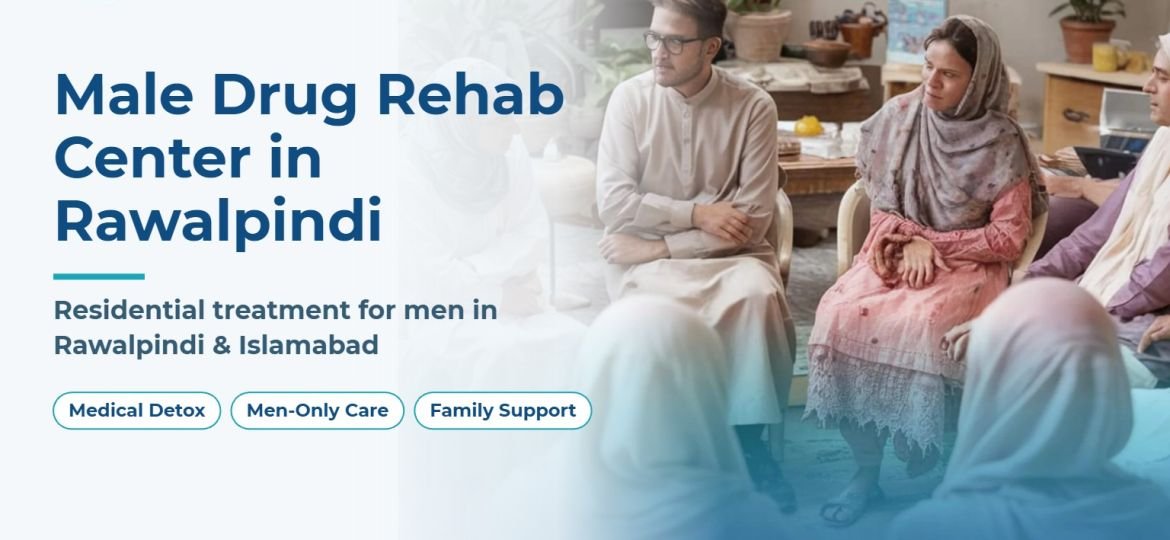
Finding the right male rehab center in Rawalpindi is often the hardest step for a family. A son, husband, brother or father may be struggling with heroin, ice (crystal meth), charas, pills or alcohol, and the family knows something must change — but they are unsure where to go, what residential treatment involves, and whether it will actually help. This guide explains how residential drug rehab for men works, what to look for in a men rehab center in Islamabad or Rawalpindi, and how the Pakistan Institute of Mental Health (PIMH) supports men and their families through recovery.
Why Men Need a Dedicated Rehab Environment
Addiction affects everyone, but men often face specific pressures that shape both their drug use and their recovery. In many Pakistani families, men carry the weight of earning, decision-making and “staying strong”. This pressure can make it very hard for a man to admit he has a problem, and many delay treatment until the addiction has already damaged their health, work and relationships.
A gender-specific rehab environment helps because:
- Men speak more openly in group therapy when they are among other men facing similar struggles.
- Treatment can focus on male-specific issues such as work stress, family responsibility, anger, peer pressure and shame.
- Privacy and dignity are protected, which matters a lot to patients and families who worry about what people will say.
- Daily routines, activities and accommodation can be planned around the needs of male patients.
Separate wards and programs for men and women are a recognised good practice in addiction care. At PIMH, gender-specific rehabilitation is part of our substance abuse treatment and gender-specific rehabilitation program for men.
Common Drugs Men Seek Treatment For in Rawalpindi & Islamabad
Families from the twin cities most often bring their loved ones for help with:
- Heroin and other opioids — highly addictive, with painful withdrawal that usually needs medical supervision. Read more in our guide to heroin addiction treatment in Pakistan.
- Ice (crystal meth) — linked with sleeplessness, aggression, paranoia and sometimes psychosis.
- Charas (hashish) and cannabis — often started young and wrongly seen as “harmless”.
- Prescription pills — sleeping pills, painkillers and sedatives used without medical advice.
- Alcohol — frequently combined with other substances.
Many patients use more than one substance, and many also live with depression, anxiety or other mental health conditions. This is why drug addiction treatment for men should always include a psychiatric assessment, not just a “cleaning” of the body.
What Is Residential Drug Rehab?
Residential drug rehab means the patient stays at the treatment centre for a period of time and follows a structured daily program under the care of a professional team. It is different from simply locking someone in a room or keeping them away from drugs. A proper nasha chhudane ka markaz (de-addiction centre) treats addiction as a medical and psychological condition.
1. Assessment
Treatment begins with a full evaluation: which substances are used, for how long, physical health, mental health, family situation and any risk factors. This helps the team build a personal treatment plan.
2. Medically Supervised Detox
Stopping some drugs suddenly can be uncomfortable or even dangerous. In detox, withdrawal symptoms are monitored and managed by doctors so the patient is as safe and comfortable as possible. Detox is only the first step — on its own it does not treat addiction.
3. Therapy and Counselling
Once the body is stable, the real work begins. Individual counselling, group therapy and evidence-based approaches such as cognitive behavioural therapy help the patient understand his triggers, manage cravings, handle stress and rebuild self-control. According to the US National Institute on Drug Abuse (NIDA), effective treatment addresses the whole person, not only his drug use.
4. Family Involvement
Addiction affects the whole household. Family sessions help parents, wives and siblings understand addiction, set healthy boundaries, improve communication and prepare the home for the patient’s return.
5. Relapse Prevention and Aftercare
Before discharge, the patient and family make a clear plan: follow-up sessions, warning signs to watch for, and what to do if cravings return. Recovery is a long-term process, and regular follow-up greatly improves the chances of staying drug-free.
Signs a Man in Your Family May Need Residential Treatment
Outpatient counselling can work for some people, but residential treatment is usually advised when:
- He has tried to quit several times but keeps going back to drugs.
- Withdrawal symptoms are severe or he uses heroin, ice or several drugs together.
- His behaviour has become aggressive, secretive or unsafe for himself or the family.
- He has lost his job, stopped studying or is in serious debt because of drugs.
- There are signs of depression, hopelessness, hallucinations or paranoia.
- The home environment makes it very hard to stay away from drugs or drug-using friends.
If you notice these signs, it is better to seek a professional assessment early rather than wait for a crisis.
How to Choose a Men Rehab Center in Islamabad or Rawalpindi
Not every centre offers the same quality of care. Before admitting your loved one, ask these questions:
- Is there a qualified medical and psychiatric team? Addiction treatment should be led by trained professionals.
- Is detox medically supervised? Withdrawal should never be handled with force or neglect.
- Are patients treated with dignity? Avoid any place that uses chains, beating or isolation as “treatment”.
- Are there separate facilities for men and women?
- Is therapy structured? Ask what a normal day looks like.
- Is the family involved? Good centres educate and support families.
- Is there an aftercare plan? Treatment should not end at the gate.
Women and families looking for a safe option for female patients can read our guide on female rehab center in Pakistan.
How PIMH Can Help
The Pakistan Institute of Mental Health (PIMH) is located on Main GT Road, Chaklala Cantt, Rawalpindi — easy to reach from Islamabad, Rawalpindi and surrounding areas. Our approach to residential drug rehab for men combines medical care, psychiatry and counselling under one roof:
- Psychiatric assessment to identify addiction and any underlying mental health conditions.
- Substance abuse treatment and gender-specific rehabilitation with separate arrangements for male patients.
- Individual counselling and group therapy focused on cravings, triggers, stress and family relationships.
- Psychiatry and psychotherapy for depression, anxiety and other conditions that often come with addiction.
- Crisis intervention and home services for families who need urgent help or support in convincing a loved one to start treatment.
- Holistic wellness activities to support healthy routines during recovery.
- Family guidance and follow-up to support recovery after discharge.
Every patient is different, so the length and type of treatment is decided after assessment. Our team will explain the plan clearly to the patient and family. To discuss admission, please contact PIMH.
Frequently Asked Questions
How long does residential rehab for men usually last?
There is no single fixed duration. It depends on the drug used, how long it has been used, physical and mental health, and progress during treatment. The PIMH team recommends a duration after a full assessment.
Is a male rehab center in Rawalpindi suitable for patients from Islamabad?
Yes. PIMH is on Main GT Road, Chaklala Cantt, Rawalpindi, which is convenient for families from Islamabad, Rawalpindi and nearby cities. We also receive patients from other parts of Pakistan.
What if my son or husband refuses to go to rehab?
Refusal is very common. Families can first book a consultation to get guidance on how to talk to their loved one. In urgent or unsafe situations, PIMH’s crisis intervention and home services team can advise on the next steps.
Will treatment be kept confidential?
Yes. Patient information is handled with privacy and respect. Many families worry about social stigma, and our team understands the importance of discretion.
Can a person relapse after rehab?
Relapse can happen, and it does not mean treatment has failed. A strong aftercare plan, regular follow-up and family support reduce the risk and help a patient get back on track quickly if it happens.
Take the First Step Today
If a man in your family is struggling with drugs, you do not have to handle it alone. Speak to the PIMH team for confidential guidance on residential drug rehab in Rawalpindi and Islamabad. Call +92-51-5451112 or +92-51-5451113, or for emergencies call +92-334-2466777. You can also email info@pimh.pk or visit us Near Royal Palace Hotel, Opposite Ayub Park, Main GT Road, Chaklala Cantt, Rawalpindi (Mon–Fri, 9:30am–6:30pm).
This article is for awareness only and is not a substitute for a professional consultation.
