

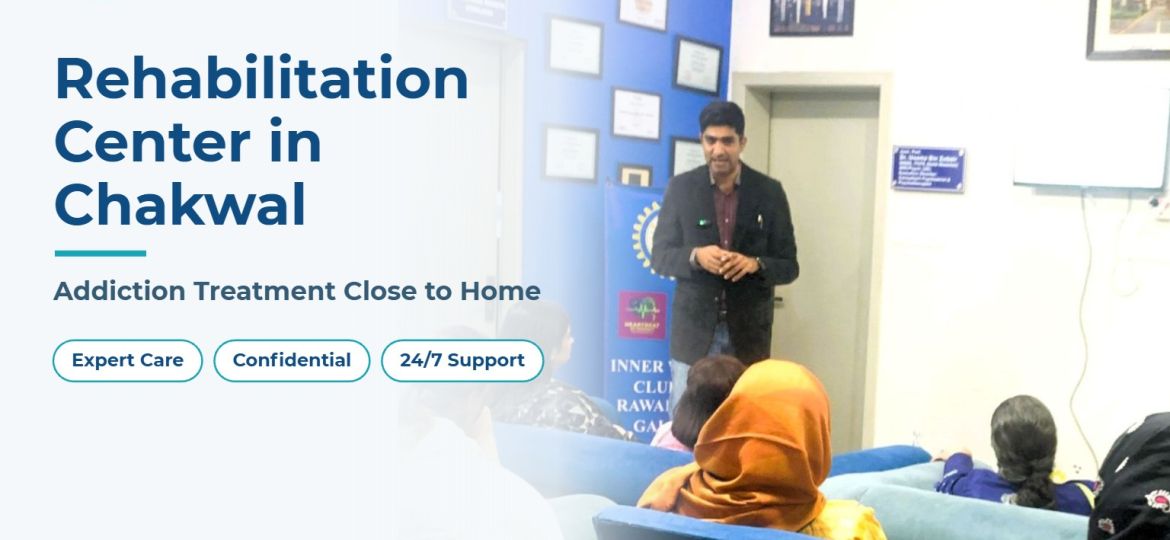
When a son, brother, husband or daughter is struggling with drugs, families in Chakwal often face the same painful question: where do we take them? Finding a trusted rehabilitation center in Chakwal or close to it can feel overwhelming, especially when the situation is urgent and the family wants privacy. This guide explains what proper addiction treatment involves, the warning signs that mean it is time to act, how to judge a rehab center, and how families from Chakwal, Talagang, Choa Saidan Shah and nearby areas can access structured care at the Pakistan Institute of Mental Health (PIMH) in Rawalpindi, a short journey up the M-2 motorway.
Why Families in Chakwal Are Looking for Rehab Close to Home
Addiction is not limited to big cities. Families across the Chakwal district, from the city itself to surrounding villages, deal with heroin, ice (crystal meth), hashish, prescription pill misuse and alcohol problems. Yet many families hesitate to seek help because of stigma, fear of what people will say, or simply not knowing where to start.
Choosing a rehab center near Chakwal matters for practical reasons:
- Family involvement: recovery works better when parents and spouses can visit, attend family sessions and learn how to support their loved one.
- Follow-up care: after discharge, regular check-ups are much easier when the treatment team is within reach.
- Emergency access: if withdrawal becomes difficult or a relapse happens, the family can reach help quickly.
- Cultural understanding: a team that understands local family structures, language and social pressures can communicate more effectively.
Because Chakwal is well connected to Rawalpindi and Islamabad by road and motorway, many families choose a fully staffed psychiatric and addiction facility in the twin cities rather than an unregulated setup nearby.
Signs That Someone Needs Drug Addiction Treatment
Families often notice changes long before the person admits there is a problem. Common warning signs include:
- Sudden changes in sleep, appetite or weight
- Withdrawing from family, old friends, studies or work
- Money or valuables going missing at home
- Mood swings, irritability, aggression or unusual secrecy
- Red eyes, drowsiness, slurred speech or very fast, restless behaviour
- Physical discomfort, sweating, body aches or anxiety when the substance is not available
- Repeated promises to quit followed by using again
If several of these signs are present, it is time to consider professional drug addiction treatment in Chakwal or the wider region. Waiting for the person to “hit rock bottom” can be risky; early treatment usually means an easier recovery.
Nasha Chhudane Ka Ilaj in Chakwal: What Real Treatment Looks Like
Many families search for nasha chhudane ka ilaj Chakwal hoping for a quick fix. In reality, addiction is a medical and psychological condition that affects the brain and behaviour. According to the U.S. National Institute on Drug Abuse (NIDA), addiction is treatable, but effective treatment usually needs to address the whole person, not just the drug use. A proper programme generally includes the following stages.
1. Medical Assessment
A psychiatrist evaluates the type of substance, duration of use, physical health and any co-existing mental health conditions such as depression, anxiety or psychosis. This assessment shapes the entire treatment plan.
2. Supervised Detoxification
Withdrawal from some substances can be uncomfortable and, in certain cases, medically risky. Detox should happen under the supervision of doctors and trained nursing staff, never with home remedies or by locking a person in a room. Medication decisions are made only by the treating doctor after examination.
3. Psychological Therapy and Counselling
Once the body is stable, the real work begins. Individual counselling, group therapy and evidence-based approaches help the person understand their triggers, manage cravings and build healthier coping skills.
4. Family Counselling
Addiction affects the whole household. Family sessions help parents and spouses understand the condition, set healthy boundaries and avoid patterns that unintentionally support drug use.
5. Relapse Prevention and Aftercare
Recovery continues after discharge. Follow-up visits, ongoing counselling and a clear relapse prevention plan are essential. Our guide on the 5 rules to prevent relapse explains practical steps families can take at home.
How to Choose a Rehabilitation Center in Chakwal or Nearby
Not every facility that calls itself a rehab centre offers safe, ethical care. Before admitting a loved one, families should ask:
- Are qualified psychiatrists and doctors involved? Addiction treatment should be led by medical professionals, not only by untrained staff.
- Is detox medically supervised? Ask how withdrawal is managed and what happens in an emergency.
- Are patients treated with dignity? Chaining, beating or isolating patients is abuse, not treatment.
- Is there structured therapy? A daily routine with counselling, group sessions and activities is a good sign.
- Are there separate facilities for men and women? Gender-specific care improves safety and comfort.
- Is the family involved? Good centres keep families informed and include them in the recovery process.
- Is there an aftercare plan? Ask what support is available after discharge.
For a more detailed checklist, read our article on how to choose the best drug rehabilitation center.
Residential Rehab vs Outpatient Treatment
The right level of care depends on the person’s situation, and the decision is best made after a professional assessment.
Residential (inpatient) rehab is often recommended when drug use is heavy or long-standing, when withdrawal needs medical monitoring, when there have been repeated relapses, or when the home environment makes recovery difficult. The person stays at the facility in a safe, structured setting.
Outpatient treatment may suit people with milder problems, strong family support and the ability to attend regular sessions. For families travelling from Chakwal, outpatient care is possible but requires commitment to regular visits to Rawalpindi or Islamabad.
Supporting a Loved One Before Admission
Convincing someone to accept help is often the hardest step. A few approaches can help:
- Talk when the person is calm and not under the influence.
- Express concern with care instead of blame or insults.
- Focus on specific behaviours you have seen and how they affect the family.
- Avoid giving cash that may be used to buy drugs.
- Speak to a counsellor or psychiatrist yourself first for guidance on the next steps.
If the person is a danger to themselves or others, or shows severe confusion or aggression, treat it as an emergency and contact a medical team immediately.
How PIMH Can Help
The Pakistan Institute of Mental Health (PIMH) in Rawalpindi serves patients from across the region, including Chakwal, Islamabad, Attock, Jhelum and beyond. Our substance abuse treatment and gender-specific rehabilitation programme is designed to provide safe, respectful and structured care. PIMH services include:
- Psychiatric assessment and psychotherapy
- Substance abuse treatment with gender-specific rehabilitation
- Counselling for patients and families
- Crisis intervention and home services
- Advanced options such as TMS and a ketamine clinic, where clinically appropriate
- Holistic wellness support to rebuild routine, health and confidence
Families from Chakwal can reach PIMH conveniently via the M-2 motorway or the Chakwal–Rawalpindi road. Our centre is located Near Royal Palace Hotel, Opposite Ayub Park, Main GT Road, Chaklala Cantt, Rawalpindi, easily accessible from Islamabad as well.
Frequently Asked Questions
Is there a good rehabilitation center in Chakwal?
Options inside Chakwal are limited, so many families choose a fully staffed psychiatric and addiction facility in Rawalpindi or Islamabad. PIMH in Rawalpindi provides medically supervised rehab and is within reach of Chakwal by road.
How long does drug addiction treatment take?
There is no fixed duration. It depends on the substance, how long it has been used, physical and mental health, and how the person responds to treatment. The treating psychiatrist will recommend a plan after assessment.
Can a family member be admitted without their full agreement?
This is a sensitive situation that depends on the person’s condition and the law. The best first step is for the family to consult a psychiatrist, who can guide them on safe and ethical options.
Is treatment at PIMH confidential?
Yes. Patient privacy is respected, and families can discuss their concerns with our team confidentially.
Do you provide separate rehab for women?
Yes. PIMH offers gender-specific rehabilitation so that both men and women can receive care in a safe and comfortable environment.
Take the First Step Today
Addiction is treatable, and recovery is possible with the right support. If someone in your family in Chakwal, Rawalpindi or Islamabad needs help, do not wait. Call PIMH at +92-51-5451112 or +92-51-5451114, or for emergencies call +92-334-2466777. You can also email info@pimh.pk or contact us online. Our team is available Monday to Friday, 9:30am to 6:30pm.
This article is for awareness only and is not a substitute for a professional consultation.
