Finding Help is the First Step
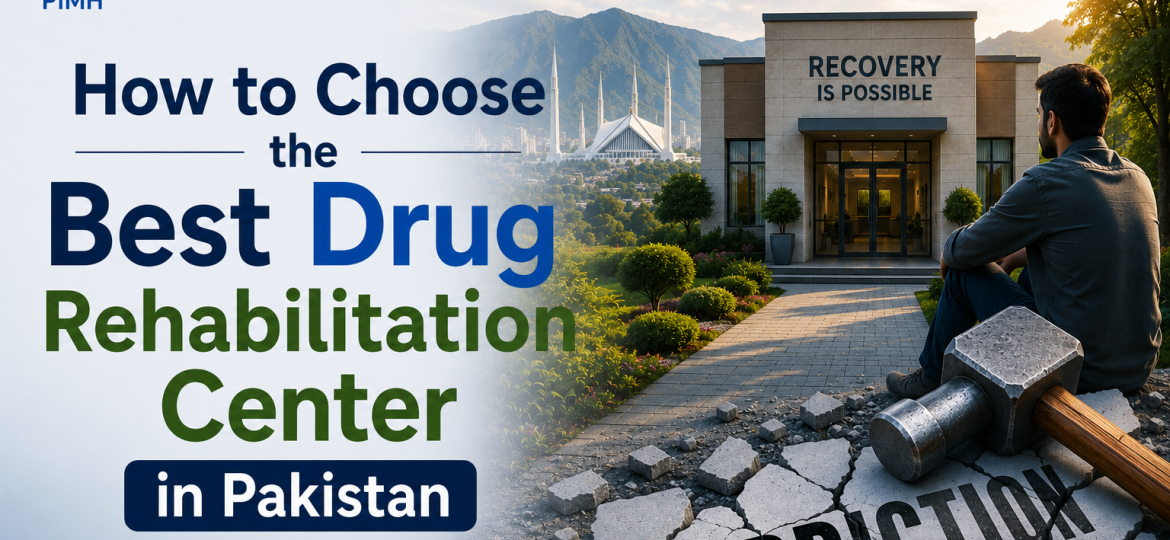
When addiction takes hold of a family, everything changes. The person you know seems to disappear. But here’s the truth that many families in Pakistan don’t realize: recovery is possible.
At PIMH (Pakistan Institute of Mental Health), we’ve worked with hundreds of families struggling through this exact situation. They often feel lost, uncertain, and afraid. They ask: “Which center should we choose? How do we know if it’s actually good? Will my loved one really recover?” These are legitimate questions that deserve real answers.
Choosing the right rehabilitation center isn’t just about picking the nearest facility or the cheapest option. It’s about finding a place that genuinely understands addiction, has qualified professionals, and offers evidence-based treatment programs. In this guide, we’ll help you understand what to look for when choosing the best drug rehabilitation center in Pakistan.
What Makes a Rehabilitation Center “Good”?
Professional Staff and Qualifications
The first thing to check is who’s running the center. Does it have:
- Licensed psychiatrists (FCPS qualified)
- Registered psychologists
- Trained addiction counselors
- Nurses with critical care experience
This matters because addiction isn’t simple. It requires medical expertise. During detoxification, people can experience dangerous physical symptoms. You need doctors who understand this, not just counselors.
“PIMH Advantage: Our team includes Dr. Usama Bin Zubair (FCPS – Psychiatry), trained counselors, and psychiatric nurses with 10+ years of addiction treatment experience. We provide comprehensive medical supervision throughout the detoxification process.”
Medical Facilities and Detoxification
Here’s what most people don’t understand: you can’t just tell someone to “stop using.” Their body is physically dependent. Without proper medical support during detoxification, they’ll suffer severe withdrawal symptoms and likely relapse.
A proper center should have:
- 24/7 medical supervision
- Medicines for withdrawal management
- ICU facilities (for severe cases)
- Emergency protocols
- Psychiatric support during detox
Understanding Addiction Treatment Programs
Evidence-Based Approaches
Pakistan’s best rehabilitation centers use proven methods:
Cognitive Behavioral Therapy (CBT): Helps identify triggers and develop coping strategies. This isn’t just talking,it’s structured, practical work that PIMH provides in individual and group sessions.
Group Therapy: Surprisingly powerful. Addicts realize they’re not alone. Hearing others’ stories and successes creates hope. Many people say group sessions were the turning point in their recovery journey at PIMH.
Individual Counseling: One-on-one sessions address personal traumas, family issues, and underlying mental health problems. PIMH offers intensive individual therapy tailored to each patient’s needs.
Family Therapy: Critical for recovery. Family dynamics often contributed to addiction. PIMH includes regular family sessions to rebuild relationships and create a supportive home environment.
Aftercare Programs: This is where many centers fail. PIMH continues support through outpatient counseling, monthly follow-ups, support groups, and relapse prevention programs for at least 6 months post-treatment.
Duration: Why Longer is Usually Better
The standard question: “How long will treatment take?”
30-day programs: Mainly detoxification. Okay for mild addiction. Success rate: 30-40%
60-day programs: Proper treatment time. Good for moderate addiction. Success rate: 60-70%
90-day programs: Best outcomes. Essential for severe addiction. Success rate: 75-85%
Extended programs (6+ months): For complex cases with mental health issues. PIMH offers 90-day inpatient programs with 6-month aftercare support.
Cost Considerations: Understanding Rehabilitation Center Cost in Pakistan
Let’s talk money because it matters.
Budget-friendly centers: Rs. 50,000-100,000/month – Basic facilities, limited staff
Quality centers: Rs. 100,000-300,000/month – Good facilities, qualified doctors, better success rates
Premium centers: Rs. 300,000+/month – Excellent facilities, top psychiatrists, highest success rates
“ PIMH Pricing: Our 90-day comprehensive program costs Rs. 2,50,000-3,50,000 (approximately Rs. 2,800-3,900 per day) which includes medical detoxification, psychiatric care, individual and group therapy, family sessions, and 6-month aftercare support. “
Red Flags: What to Avoid
During your search, watch for these warning signs:
- No licensed doctors (only counselors, no medical professionals)
- Pressure to admit immediately (good centers evaluate carefully first)
- No success rate data (honest centers track and share outcomes)
- Privacy concerns (gossip among staff, social media posts)
- No aftercare program (what happens after 60 days?)
- Bad online reviews (check Google, Facebook, patient testimonials)
- Too cheap pricing (if suspiciously inexpensive, there’s probably a reason)
- No psychiatric support (addiction often comes with depression or anxiety)
Green Flags: What to Look For
- Licensed, experienced staff (psychiatrists, psychologists, counselors)
- Thoughtful admission process (they ask detailed questions)
- Medical facilities (proper laboratory, pharmacy, emergency setup)
- Evidence-based programs (can explain their methodology clearly)
- Family involvement (include and educate family members)
- Strong aftercare (support continues after inpatient treatment)
- Verifiable success rates (they provide data and references)
- Privacy protection (professional confidentiality policies)
- Transparency (clear pricing, no hidden costs)
Questions to Ask When Evaluating Centers
Before committing, ask these specific questions:
- “What are your staff credentials?” (Request proof)
- “What’s your medical protocol for detoxification?”
- “What therapy methods do you use?”
- “How long are programs typically?”
- “What’s your aftercare program like?” (Critical question)
- “Can you provide verifiable success rates?”
- “What happens if someone relapses?”
- “How involved is family therapy?”
- “What’s the cost breakdown?”
- “Can I speak with past patients or their families?”
Making Your Final Decision
After researching drug rehabilitation programs and visiting a few centers, here’s how to decide:
- Trust your gut: Does it feel professional? Caring? Competent?
- Check the match: Is the program suited to your loved one’s specific addiction?
- Verify credentials: Don’t just ask,verify independently
- Talk to survivors: Past patients often give honest feedback
- Review the contract: Understand costs, duration, aftercare
- Consider timing: When can they admit? Is it the right time?
Conclusion: Your Path to Recovery Starts Here
Choosing the best drug rehabilitation center in Pakistan is one of the most important decisions your family will make. Don’t rush it. Don’t choose based solely on cost or location.
Look for professional staff, medical facilities, evidence-based treatment, family involvement, and strong aftercare. Ask hard questions. Verify credentials. Talk to past patients.
Your loved one deserves real help from real professionals in a real facility. Take time to find it.
PIMH – Your Partner in Recovery
“At PIMH (Pakistan Institute of Mental Health) in Rawalpindi, we’re committed to helping families find the path to recovery. Our comprehensive addiction treatment programs combine medical expertise with compassionate care.”
Explore More:
Best Drug Rehabilitation Center in Pakistan
Best Addiction Center in Rawalpindi
Frequently Asked Questions
Is 30 days enough for drug rehabilitation treatment in Pakistan?
30 days is primarily detoxification time. While physical withdrawal clears in 7-14 days, psychological recovery requires longer. Most addiction specialists recommend minimum 60 days, ideally 90 days, for meaningful recovery. Shorter programs work for motivated individuals with mild addiction, but severe cases need extended treatment for success. PIMH recommends 90-day programs for comprehensive recovery.
Can drug rehabilitation centers in Pakistan guarantee recovery and prevent relapse?
No center can guarantee permanent recovery,addiction is a chronic condition like diabetes. However, quality centers significantly reduce relapse risk through proper treatment, strong aftercare, and support groups. Success rates range from 30-40% for basic programs to 75-85% for comprehensive 90-day programs with aftercare. Commitment and family support matter as much as the center itself.
Are drug rehabilitation centers in Pakistan confidential and private?
Yes, professional centers maintain strict confidentiality legally required by Pakistan’s medical ethics. Your identity, medical records, and treatment details are protected. However, confirm this in writing before admission. Ask about their privacy policy, staff training on confidentiality, and security measures for patient files. PIMH maintains strict confidentiality standards for all patients.
What should I do if my family member refuses to go to rehabilitation?
This is common. Try motivational conversations about consequences. Some families use interventions with professional counselors. In severe cases, legal intervention exists but is difficult. Most importantly, stop enabling the addiction. Make recovery attractive, not punishment. Sometimes hitting rock bottom motivates change. Consult an addiction specialist on your specific situation.
How do I know if an addiction treatment program is legitimate and approved in Pakistan?
Check if the center is registered with Pakistan’s Health Department or provincial health authorities. Ask for FCPS-certified psychiatrists (verify with CPSP). Check online reviews on Google and Facebook. Ask for references from past patients. Legitimate centers are transparent about credentials, facilities, and outcomes. If they refuse to provide details, that’s a major red flag.

[…] For a more detailed checklist, read our article on how to choose the best drug rehabilitation center. […]